From Conceptual Research Topic to Journal Acceptance Scientific Reports (Springer Nature | Q1/Q2 Category)
A concept-to-acceptance workflow for a multidisciplinary journal: structured manuscript upgrading, CFA/SEM clarity strengthening, and a disciplined revision response cycle.
Case Snapshot
Client & Author Information
First Author
Name: Mr. Lu*****
Affiliation: Handan City Fu Chun Middle School NO.54 Cong Tai Rd, Cong Tai District, Handan, China
E-mail: Max************om
Second & Corresponding Author
Name: Ms. Ya*******
Affiliation: Handan Polytechnic College, Institute of Marxism NO.141 Chu He Rd, Han Shan District, Handan, China
E-mail: Hu**********om
Third Author
Name: Dr. Ji********
Affiliation: Academic Affairs Department No.8 Qingyuan North Rd., Daxing District, Beijing, China
E-mail: ji***************om
Research Overview
Title of the Study: Gamification in Higher Education Administration: A Conceptual Model for Enhancing Faculty and Staff Engagement
Research Domain: Higher Education Administration, Organizational Behavior, Gamification, Employee Engagement
Geographical Focus: China
Methodology Used:
• Conceptual model development
• Confirmatory Factor Analysis (CFA)
• Structural Equation Modeling (SEM)
Core Objective:
To examine how gamification, job satisfaction, and organizational culture influence faculty and staff engagement within higher education administration.
Initial Manuscript Stage
At the initial stage, the authors had:
• A clear and relevant research topic
• A strong conceptual foundation
• Quantitative data suitable for CFA and SEM analysis
However, the manuscript required:
• clearer conceptual flow between constructs
• stronger justification of hypotheses
• improved structure for international journal standards
• alignment with the scope and expectations of high-impact multidisciplinary journals
The manuscript was not submitted before structured academic guidance was applied.
Journal Targeting & Submission Strategy
Based on the topic, methodology, and contribution level, the manuscript was aligned with Q1/Q2 journals under the Springer Nature group, including:
• Scientific Reports
• Sustainability
• BMC Psychology
• Humanities and Social Sciences Communications
After scope and methodology alignment, Scientific Reports was selected as the most suitable target journal.
Support & Academic Process Applied
The following structured process was followed:
Manuscript Structuring
• Re-organization of introduction and literature review
• Clear articulation of relationships between gamification, job satisfaction, organizational culture, and engagement
• Improved logical flow of hypotheses
Methodology & Results Clarity
• Strengthening explanation of CFA and SEM procedures
• Clear presentation of reliability and validity measures
• Improved interpretation of structural relationships
Academic Language & Compliance
• Language polishing to meet international academic standards
• Formatting according to Springer Nature submission guidelines
All support focused strictly on clarity, structure, and compliance, while full authorship and intellectual ownership remained with the authors.
Peer Review & Revision Phase
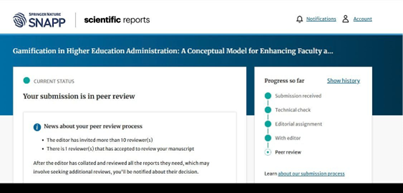
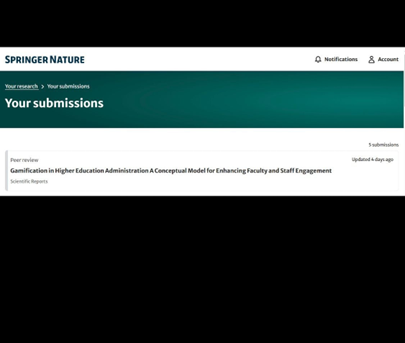
After submission to Scientific Reports, the manuscript entered the standard editorial and peer-review process.
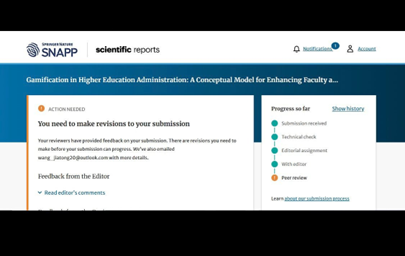
Editorial Outcome:
• Revision required before final decision
Revision Focus:
• Clarification of theoretical positioning
• Strengthening discussion and practical implications
• Refinement of explanations responding to reviewer feedback
Revisions were prepared systematically and resubmitted through the Springer Nature submission system.
Final Outcome & Acceptance
Following successful revision and editorial evaluation:
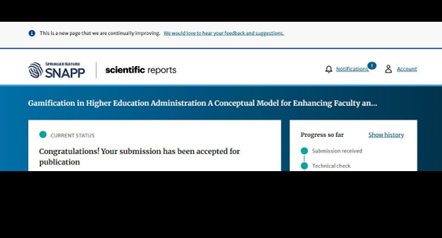
• Manuscript Status: Accepted for publication
• Journal: Scientific Reports
• Publisher: Springer Nature
• Indexing Category: Q1 / Q2
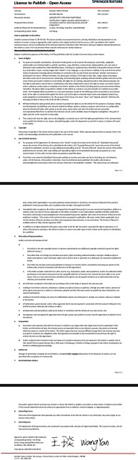
An official Springer Nature License to Publish – Open Access was issued, confirming acceptance and publication rights.
Evidence & Documentation
The following evidence is available and included in this case study for B2B review:
Submission system screenshots showing
• Revision request status
• Acceptance confirmation
• Springer Nature License to Publish (Open Access)
• Manuscript submission and revision timeline
All documents are authentic and verifiable through Springer Nature systems.
Timeline Summary
3rd March, 2025
Topic & Concept Development
7th March, 2025
Journal Alignment & Targeting
15th March, 2025
Manuscript Submission
29th April, 2025
View Image
Peer Review
6th June, 2025
View Image
Revision Required
29th June, 2025
View Image
Revised Submission
28th July, 2025
View Image
Acceptance Confirmed
1st August, 2025
View Image
Publication Agreement Executed
Ethical & Transparency Statement
• Acceptance followed independent peer review and editorial decision
• Authors retained full ownership and responsibility for the research
• Support was limited to academic guidance, revision, and submission compliance